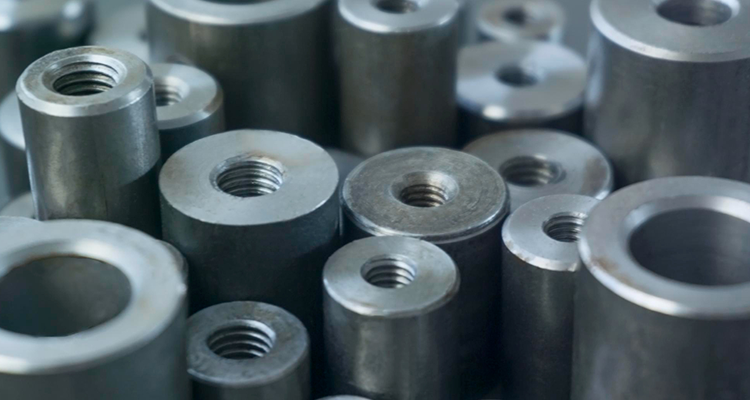
Plastic processing machinery manufacturers who take the difference between nitrided and bimetallic screw barrels lightly often realise their mistake later, when the wrong choice starts affecting machine performance and leads to unnecessary wear and degradation.
It’s easy to think of a screw barrel as just another small part of a machine. But in reality, even these seemingly minor components can have a big impact on how the entire machine performs. That’s why choosing the right screw barrel is important,not just based on the price, but on what actually suits your application.
The problem is, many screw barrel manufacturer in India don’t really explain where nitrided and bimetallic screw barrels differ, or which one makes more sense for a particular application. This often leaves manufacturers with incomplete information and, eventually, a choice based more on guesswork or budget than facts.
So, let’s clear up some of the things that are often overlooked when choosing between nitrided and bimetallic screw barrels,and look at a few practical points you should know before making the decision.
Nitrided Screw Barrel and its limitations
Nitriding is the process of hardening a metal surface by exposing it to nitrogen through heat treatment for 72 hrs. This creates a case-hardened surface that protects metal from corrosion and abrasion for longer than expected.
Using this phenomenon, high-performance nitriding barrels are fashioned, which are cost-effective and can be utilised for general-purpose resins.
The material and process specifications can vary between manufacturers, which can directly influence the barrel’s service life. For instance, Shreeji Corporation manufactures nitrided barrels using EN41B steel, with gas nitriding treatment producing a hardness level of around 62-65 HRC, a combination that delivers a durable, wear-resistant surface for reliable performance.
However, there is a certain limitation to which a nitrided screw barrel can suffice for the required level of resistance. For instance, high abrasive fillers like glass fibre, calcium carbonate and mineral fillers can wear through the nitrided surface, exposing the soft base steel that can be easily eroded.
Many screw barrel manufacturers in India rarely quantify the logic that nitriding doesn’t mean that the coating of resistance may last forever.
What Bimetallic Barrels Change?
Unlike nitrided barrels, bimetallic barrels aren’t just a result of surface treatment producing a coating.
Instead, they‘re a wear-resistant alloy, created by centrifuging metal combinations like nickel-chromium or tungsten carbide and casting as a lining fused to the steel shell, typically 1.5 mm to 3 mm thick.
Processing abrasive or corrosive materials? Choose a bimetallic barrel engineered for the job. Explore Shreeji Corporation’s alloy options.
Consequently, these aren’t harmed easily when working with PVC compounds or flame retardants. It’s also important to note that if the surface of the nitrided layer is gone, so is the barrel’s capability to withstand corrosion. This wouldn’t be the case if the same happens to bimetallic barrels; they will still retain a substantial wear -resistant alloy layer and withstand longer use.
Hence, it can be concluded that the role of bimetallic screw barrels in abrasive plastic processing is much more significant than that of nitrided screw barrels
Higher Cost of Bimetallic Screw is Unjustified in a Few Cases
A bimetallic barrel costs more upfront. That is not a secret.
The better question is whether the additional investment reduces the costs that come later, like unplanned downtime, replacement, maintenance, inconsistent output and dimensional changes caused by barrel wear.
The Manufacturer Matters as Much as the Metallurgy
Wear resistance is only as good as the manufacturing behind it, which is why the choice of supplier matters nearly as much as the metallurgy itself. Working with an established bimetallic screw barrel manufacturer in Ahmedabad means getting a configuration built around actual process conditions, not a catalog part pulled off a shelf.
Want to go deeper on matching configuration to material? Our guide on choosing the right twin screw barrel manufacturer in Ahmedabad for your plastic processing application covers it in more detail.
If output has been dropping and the machine keeps checking out fine on paper, get in touch with Shreeji Corporation, a bimetallic screw barrel manufacturer in Ahmedabad. We’ll help confirm whether wear is the actual cause and recommend the right setup before it costs another production run.
Reach out to our team today for expert guidance in selecting the right components for your specific manufacturing needs.
As the screw barrel wears, the working clearance can change. That can affect pressure stability, melting, mixing and output consistency. For a low-wear application, paying for a premium barrel may not deliver enough additional value.
For an abrasive, high-volume application, however, the calculation can look very different.
Higher HRC does not always equal higher performance
If a screw barrel manufacturer offers a product with high HRC, it’s conventionally assumed that it’s better than one with lower HRC. However, that isn’t always the case.
A bimetallic barrel may have a lower stated surface hardness than a nitrided barrel, but can still deliver better efficiency in a particular application. This is because its internal alloy layer is specifically engineered for abrasion and corrosion resistance.
So while purchasing an optimal screw barrel, one shouldn’t only refer to HRC, but also material compatibility with the polymer, filler and operating conditions, something that any screw barrel manufacturer in India wouldn’t convey directly to consumers.
How to Make Sure You’re Buying the Right Barrel?
Nitrided and bimetallic barrels each have their place. However, the right choice depends on your material, operating conditions and expected barrel life. Before making the decision, check these key factors:
Match the Barrel to your actual filler percentage: Guesswork doesn’t land well. If you’re running abrasive material, bimetallic is worth it. If it’s unfilled or lightly filled, nitrided does the job for far less. Know your real mix before you decide, not after.
If you’re going Bimetallic, get the alloy and lining thickness in writing. A sales call promising a “premium lining” means nothing once the barrel’s on your machine. It needs to be on the drawing, not just in conversation.
Ask for a hardness test report before you commit. This is the one document that proves a bimetallic barrel is actually built the way it’s being sold, not just called bimetallic.
Ask what the 3–5x lifespan claim is based on. If a supplier quotes that number without saying what filler percentage it was tested at, ask. Your actual gain could be far smaller if your material doesn’t match their example.
Check the lead time against your maintenance window. Bimetallic barrels take longer to cast than nitrided ones. If the quoted timeline is identical for both, something in the process was likely shortened.
The Final Word
Making the right choice between nitrided Screw and bimetallic screw can be overwhelming, especially if you do not have an experienced screw manufacturer guiding you right. That’s where Shreeji stands out from the rest. If you want to make a smart decision, instead of a convenient one, get in touch with Shreeji Corporation. We can evaluate what type of barrel is the perfect match for your industrial needs and ensure your investment is headed on a success curve.