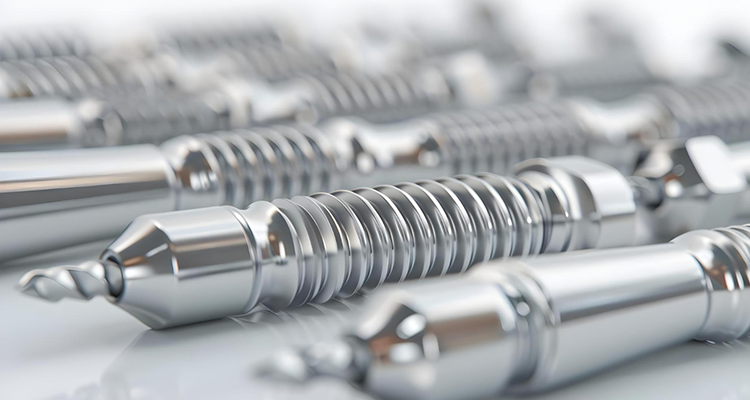
When processing glass-filled polymers and abrasive compounds, screw wear seems inevitable. As the screw surface gradually erodes, maintaining consistent processing performance becomes harder, and replacement costs can rise. To combat this hindrance, many screw barrel manufacturers suggest using HVOF-coated screws, as they offer 4 to 5 times greater wear and abrasion resistance than non-coated ones.
However, achieving this level of performance depends on more than simply opting for the HVOF-coated screw. The coating must be compatible with the polymer formulation and capable of withstanding the machine’s operating conditions. Evaluating these factors alongside the manufacturer’s technical specifications helps determine whether an HVOF-coated screw meets the demands of your application.
How HVOF Coating Is Applied to Plastic Processing Screws
Before carrying out the HVOF coating, the screw is thoroughly cleaned and grit-blasted in order to eliminate any contaminants and to produce the required surface roughness for effective adhesion of the coating.
After the surface has been prepared, tungsten carbide alloy powder is ejected at high speed onto the rotating screw via the HVOF process. When the particles hit the screw, they produce a dense coating layer. Tungsten carbide is valued because of its high hardness and wear resistance, which is why it is a suitable option for plastic processing screws.
Because it considers these properties important, the experienced engineering team at Shreeji Corporation requires that tungsten carbide alloy be used in its HVOF-coated screws to enhance the surface durability.
How HVOF Coatings Improve Screw and Barrel Performance
Using HVOF-coated screws can greatly increase productivity in the processing of plastics. The way in which HVOF coating improves the performance of a screw is as follows:
- Enhance Abrasion Resistance
When hard reinforcing particles, glass fibres, and mineral fillers are processed continuously, they cause the working surface of the screw to wear down slowly. As a result, this affects both the surface condition and the dimensional accuracy of the screw. On the other hand, the tungsten alloy used in HVOF-coated screws provides a dense coating which is both hard and resistant to penetration by particles; thus, the dimensional integrity of the screw is kept from deteriorating.
It prepares the substrate and forms a coating that has a strong mechanical bond. This adhesion, combined with the low porosity of the coating, enables it to resist cracking, chipping, and delamination caused by mechanical loads and by the repeated temperature changes that occur during plastic processing.
- Strong Coating Adhesion and Stability
A coating is effective only when it remains firmly bonded to the screw surface during operation. In the HVOF coating process, high-velocity tungsten carbide particles impact the prepared substrate and form a coating with strong mechanical bonding. This adhesion, combined with the coating’s low porosity, helps resist cracking, chipping, and delamination caused by mechanical loads and repeated temperature changes during plastic processing. - Longer Component Lifespan
By slowing the progression of surface wear and corrosion, HVOF-coated screws can remain operational for longer service intervals before replacement or refurbishment is required. For manufacturers, this means fewer unplanned screw replacements, reduced maintenance and machine downtime, lower component replacement costs, and improved equipment availability for continuous production.
Explore Shreeji HVOF Coat Screws, featuring a coating density of up to 99.8% and a specified adhesive force of 10,000 psi for demanding plastic processing applications.
Applications of HVOF-Coated Screws in Plastic Processing
HVOF-coated screws are used in plastic processing machinery in cases where the material composition and the conditions of production require a specialised surface on the screw.
Their use extends to several different types of polymer processing, such as:
- Glass-Filled Engineering Plastics: Processing glass-fibre-reinforced polymers used in automotive parts, industrial housings, and structural components.
- Flame-Retardant Polymer Compounds: Processing specialised plastics used in electrical enclosures, switchgear, and circuit protection components.
- Mineral-Filled Polymer Compounds: Processing plastics containing calcium carbonate, talc, and other mineral additives used to modify material properties.
- Recycled Polymer Compounds: Processing recovered plastics with varying compositions and additives, where coating suitability depends on the characteristics of the feedstock.
Since different applications have different requirements regarding screw design and the performance of the coating, it is necessary to understand the material being processed or have access to the right screw barrel manufacturer to provide appropriate technical guidance.
Why Does Choosing the Right Manufacturer Matter for HVOF-Coated Screws?
An HVOF-coated screw is only as reliable as its coating quality and the expertise behind its manufacturing. The wrong choice can lead to premature wear, coating failure, costly downtime, and production losses that go far beyond the initial investment.
Shreeji Corporation brings together material expertise, precision manufacturing, and specialised coating processes to deliver HVOF screw solutions for demanding plastic processing applications. From material selection to coating application, every detail matters in achieving the durability and performance your production line requires.
Invest in performance that lasts. Get in touch with Shreeji Corporation experts to discuss your requirements and find a solution suited to your application.