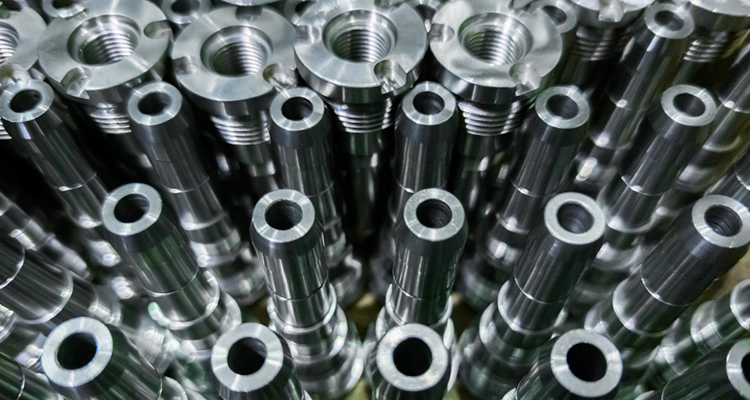
The Secret to Smoother Plastic Processing Starts with the Right Injection Head
It’s easy to overlook the injection head when you’re looking at an entire plastic processing machine. It’s a relatively small component, but it sits at an important point in the process, where the molten plastic has to move from the plasticizing barrel into the mold smoothly and consistently. Get the plastic processing injection head wrong, and problems can start showing up in places you may not immediately connect to it. So, what should you actually look for when choosing one? Let’s break it down.
What does the injection head actually do?
To put it in plain words, the key function of an injection head is to connect the plasticising barrel to the mould and provide the passage through which molten plastic is delivered. But its job doesn’t end here. Its real contribution surfaces when the melted material reaches its head, and it has to deliver that melt into the mold in a controlled and repeatable way.
This is particularly important in high-volume production, where even small inconsistencies can show up across thousands of cycles. That’s also why the components working before the injection head matter, particularly the screw and barrel that prepare and move the melt forward. You can read more about the role of screw barrels in plastic processing.
If a plastic processing injection head is well designed, it will seamlessly process a more controlled material path while supporting consistent pressure and flow. Moreover, it can also reduce issues such as melt drooling or stringing when a shut-off design is used.
Shreeji Corporation manufactures both standard injection heads and injection heads with shut-off nozzles, allowing the configuration to be selected according to the machine and application. Its injection heads are manufactured from EN41B and gas nitrided for a surface hardness of 65–68 HRC, with diameters available from 14 mm to 200 mm.
Why does the injection head matter more than assumed?
When you think about the entire plastic processing, the importance of an injection head starts making more sense. Think about it. When the screw and barrel prepare and push the material forward, the injection system has to build and deliver the required pressure. While the moulds then receive that material and form it into the required part.
The injection head sits right in the middle of that handover, performing as the bridge.
If its dimensions, flow path, surface condition, or shut-off mechanism are not suited to the application, the problem may not always appear as an obvious component failure. Instead, it can show up as inconsistent filling, material leakage, stringing, pressure-related variation, or more frequent maintenance.
That is why replacing an injection head should not simply be a matter of finding one that fits the machine.
What Should You Look for When Choosing an Injection Head?
One shouldn’t presume an injection head is one-size-fits-all. The easiest way to get clarity on your purchasing choice is to have a checklist with crucial factors to consider. Don’t forget to include these:
Material Being Processed
Different polymers and formulations can place different demands on the flow path and component surfaces. Filled or abrasive materials, for example, may require greater attention to wear resistance.
Machine and Mold Compatibility
Dimensions, connection details, flow requirements, and the machine’s configuration all do matter. A technically good component is still the wrong one if it does not match the machine properly.
Surface Hardness and Wear Resistance
The plastic processing injection head repeatedly comes into contact with molten polymer and operates under demanding processing conditions. Over time, surface wear can affect performance and dimensional accuracy.
This is where manufacturing and surface treatment become important. The goal isn’t simply to make a harder component. It is to create an injection head that can maintain its functional surfaces and dimensions through repeated production cycles.
What could go wrong if the injection head isn’t right?
The aftermath of placing an unfit injection head comes into play sooner or later. You will see signs like material drooling from the nozzle, stringing when the nozzle retracts, inconsistent material delivery, or increasing maintenance requirements. Sometimes, symptoms are so subtle that operators compensate by adjusting processing parameters, increasing inspection frequency, or repeatedly adjusting the machine to keep production within acceptable limits.
The machine may technically still be running, but the process is no longer as predictable as it should be.
And in a production environment, predictability matters. A component that helps maintain consistent flow and reliable shut-off can have an impact beyond the component itself, particularly when the machine is running continuously.
The final word
At the end of the day, a plastic processing injection head is not just about getting the right size or making it fit the machine. It’s about how well it handles the material, pressure, and demands of your actual process. Get those things right, and you have one less component working against your production.
That’s where Shreeji Corporation comes in, manufacturing standard and shut-off injection heads with precision, durability, and application-specific requirements in mind. Looking for the right injection head for your machine? Talk to Shreeji Corporation about your requirements.